Al Ain Oasis
Al Ain Oasis offers palm gardens, traditional irrigation and shaded passages in the middle of a city in the Emirate of Abu Dhabi. It is a working agricultural landscape and part of a UNESCO World Heritage property.
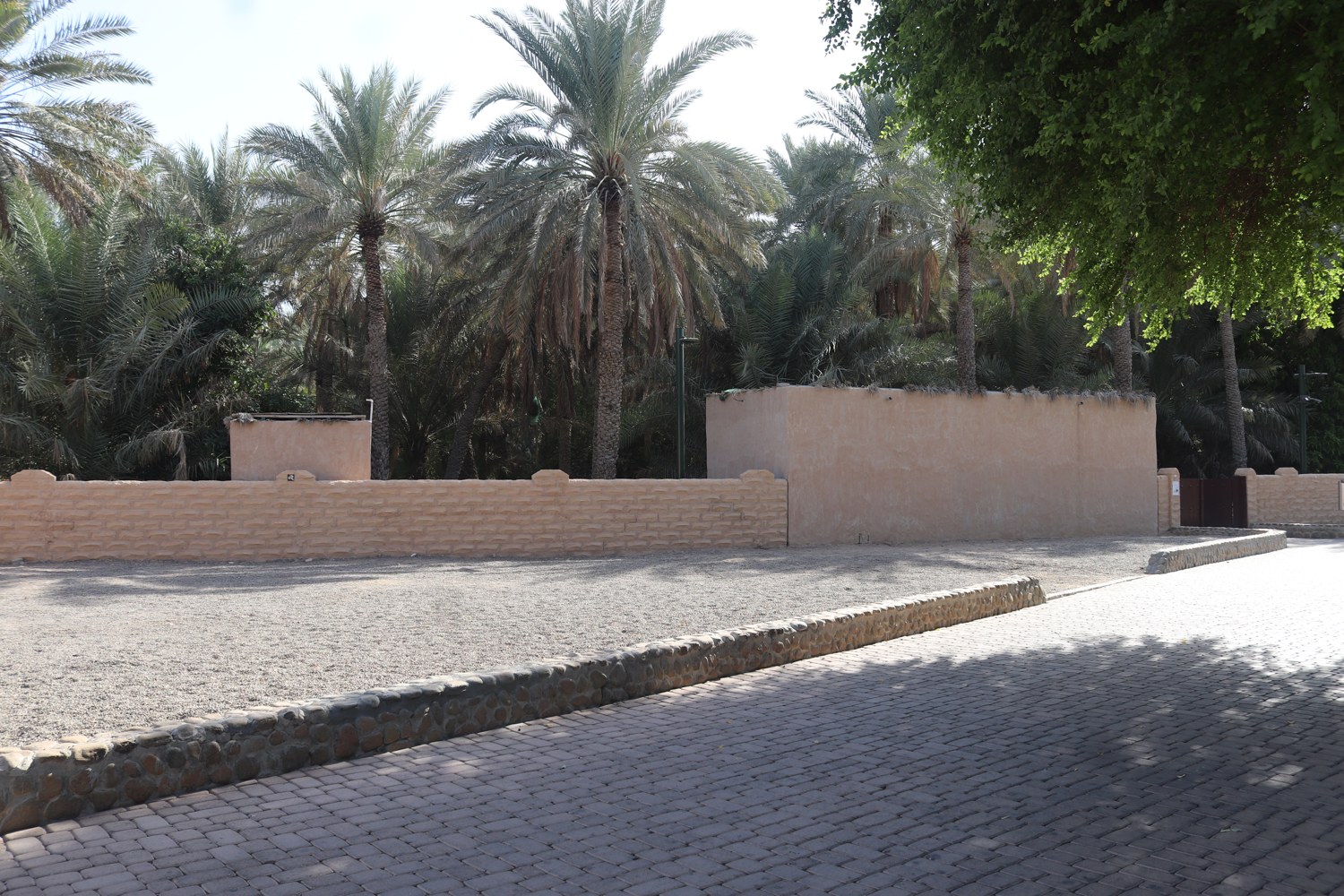
An oasis within the city
Al Ain is an inland city in the Emirate of Abu Dhabi. Al Ain Oasis is one particular oasis in the Al Mutawaa area, not every green area in the city. The route runs between palm plots from a chosen entrance.
A working agricultural landscape
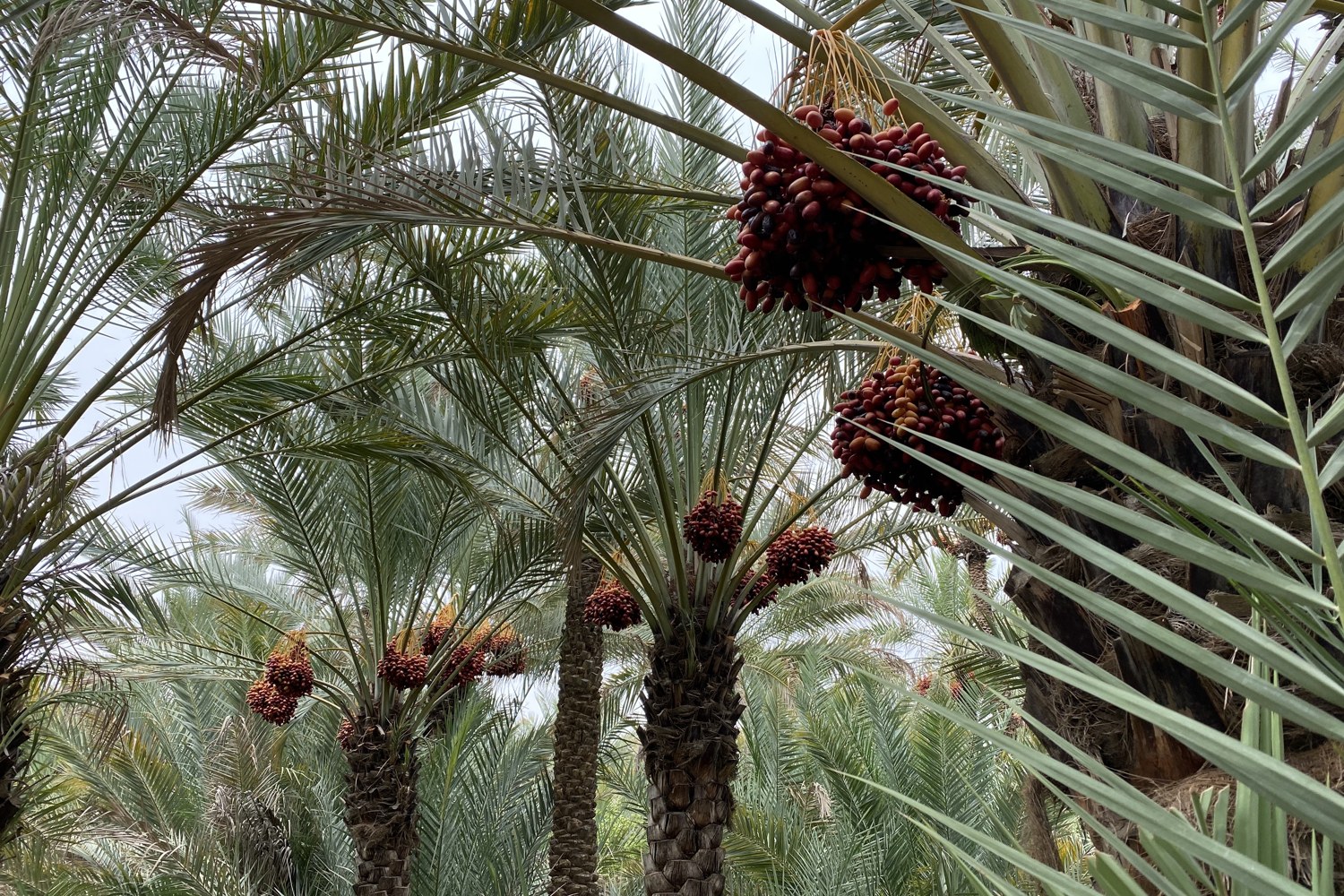
The oasis covers 136 hectares and is the largest in Al Ain. Farmers tend more than 147,000 date palms of over 100 varieties, as well as fodder crops and fruit trees such as mango, orange, banana, fig and jujube (sidr). Individual plots are separated by historic boundary walls. The oasis has been open to the public since 2016.
Falaj: water shapes the place
A falaj is a traditional water supply system; the plural is aflaj. Water reaches the oasis from wells and the ancient aflaj, which carry it from the mountains through underground and surface channels. Two main aflaj serve the oasis, Al Aini and Al Dawoodi: they supply separate parts of it and both originate to the south-east, towards the Hajar Mountains.
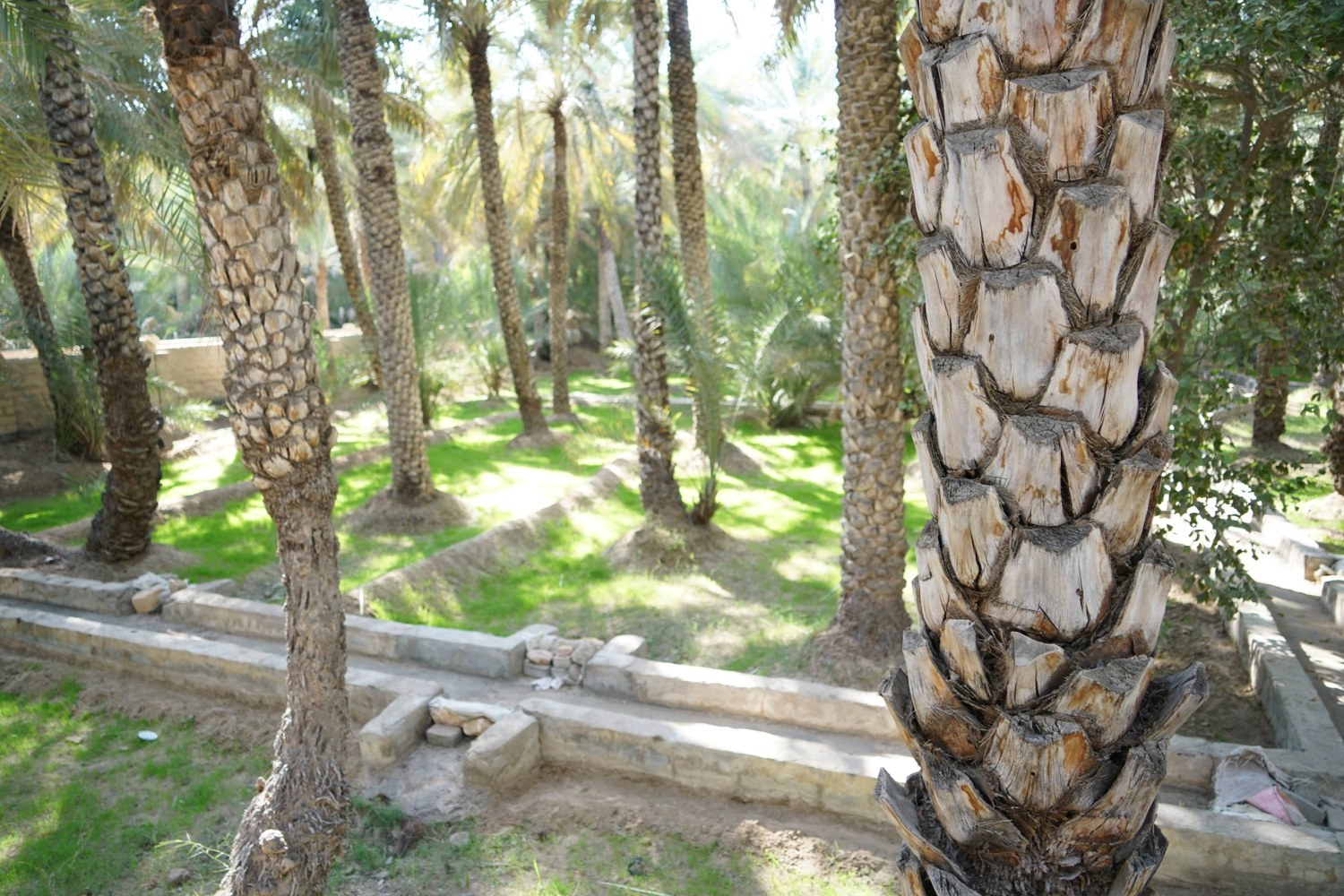
The palm canopy and the harvest
Beneath the palms the agricultural landscape has several layers: a high canopy, lower planting and irrigation at ground level. Dates ripen in summer, with bunches visible among the leaves.
UNESCO: one component of a wider property
Al Ain Oasis belongs to the serial World Heritage property Cultural Sites of Al Ain, inscribed in 2011. The property also includes Hafit, Hili, Bidaa Bint Saud and the other oases.
The Eco-Centre and exhibitions
In 2016 an educational Eco-Centre and a network of shaded pathways were built for visitors. Facilities include the Oasis Garden, a Miniature Oasis and a Falaj Exhibition, which explain where the water comes from, how plots connect and how the farming works.