Bur Dubai
The older city on the Bur Dubai bank of Dubai Creek, with Al Fahidi, Al Shindagha, shopping streets and residential neighbourhoods. Heritage sits alongside everyday apartment living, Metro connections, markets and modern retail.
The city beside the Creek
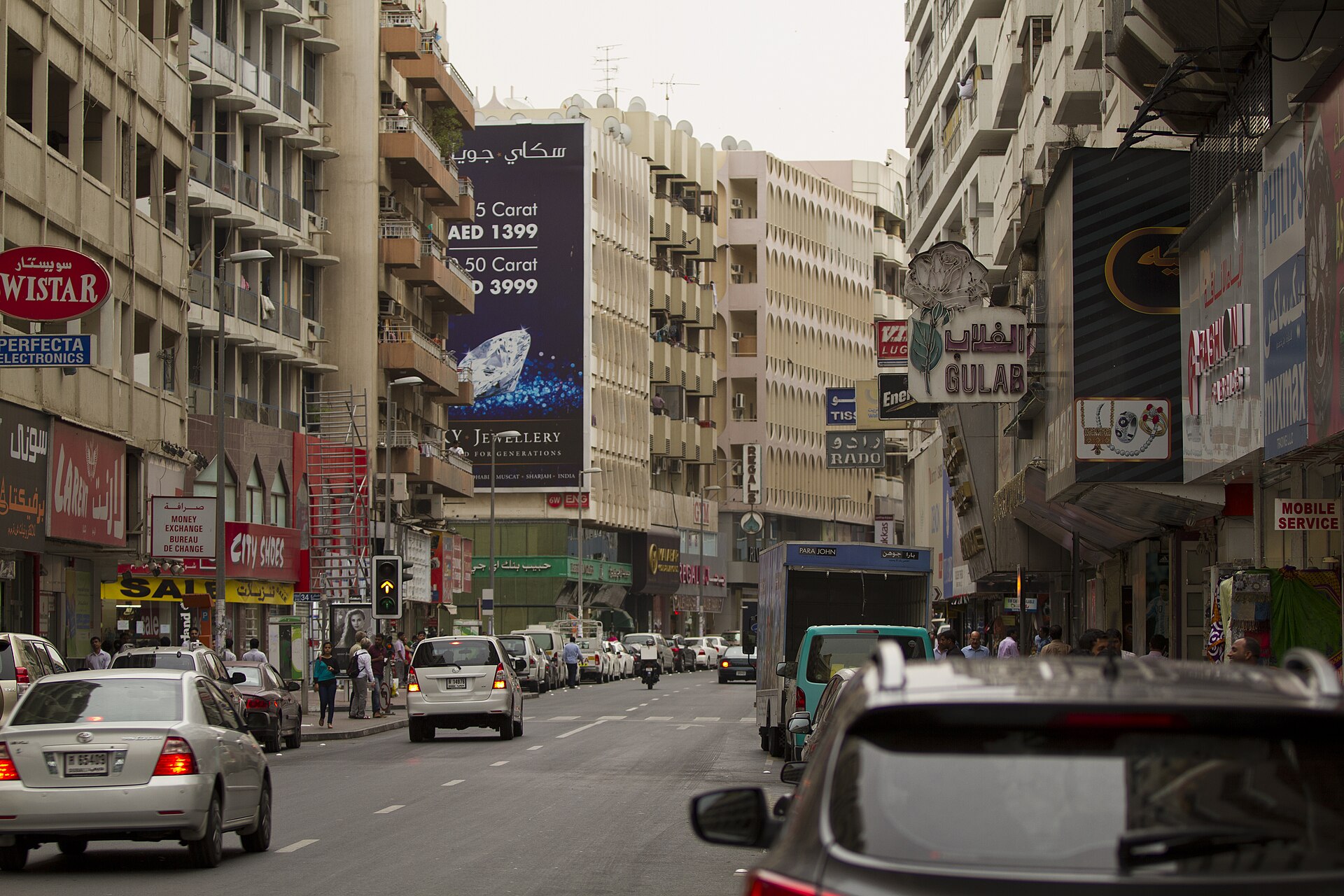
Bur Dubai is a broad name for the urban area across Dubai Creek from Deira. Historic neighbourhoods, shopping streets and residential districts with different building patterns share this side of the city. Al Fahidi and Al Shindagha are associated with heritage, while Al Mankhool and Al Raffa combine everyday apartment living with retail. Broader usage can include neighbouring parts of the older city, but an individual neighbourhood remains important to an address. This is not a single new masterplan: streets, markets, homes and public infrastructure developed at different times. The older bank contains considerably more than the visitor route between its heritage landmarks.
Apartments and residential streets
Apartments form the main local housing stock. Studios, smaller homes and family layouts occupy buildings of different ages and heights. Older residential blocks stand alongside newer buildings, with shops often occupying lower floors. Some areas also contain villas, but the broader setting is an established urban neighbourhood rather than a system of gated villa compounds. Pools, gyms and parking vary between buildings. Everyday life also draws on the surrounding city network: grocery stores, pharmacies, cafés and practical services along neighbouring streets. The relationship between a home and its street is therefore an important part of residential life here.
Al Fahidi and Al Shindagha
Al Fahidi Historical Neighbourhood preserves architecture with barajeel wind towers, narrow passages and internal spaces. Historic buildings house cultural organisations, galleries and specialised museums. Al Shindagha Museum is a separate heritage ensemble beside the Creek, telling the story of Dubai through historic houses and themed exhibitions. These include Dubai Creek: Birth of a City and Perfume House, which explores fragrance traditions and scented-oil making. The two areas represent different parts of the older bank's heritage. They add cultural depth to the surroundings without describing all of Bur Dubai, where ordinary trading streets and apartment neighbourhoods continue nearby.
Meena Bazaar, textiles and modern shopping
Trade is one of Bur Dubai's defining activities. Meena Bazaar is associated with South Asian clothing, jewellery and handicrafts, while the textile-market area offers fabrics and tailoring. Small everyday shops, restaurants and cafés operate nearby. BurJuman provides a different scale of retail: a major mall with shops, a supermarket, cinema and urban services connected with the Metro station. Street-based trading and a modern mall therefore coexist within the same broader district. They serve different needs, from a short errand near home to a separate trip for clothing, fabrics or entertainment.
The Creek and abra crossings
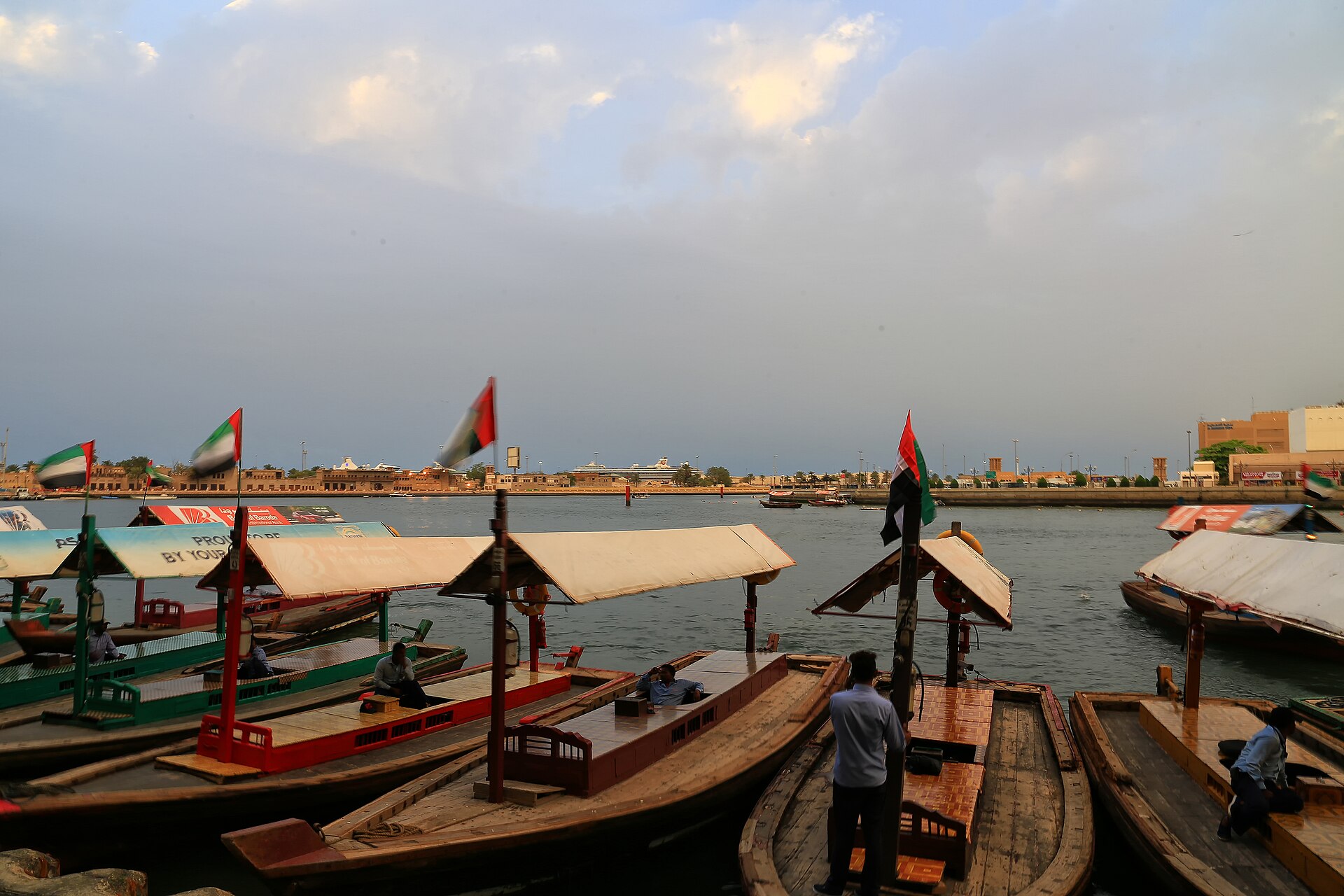
Dubai Creek connects Bur Dubai and Deira in practical as well as visual terms. Traditional abras continue to cross between Bur Dubai and Deira Old Souq, and between Dubai Old Souq and Al Sabkha. Trading routes, heritage neighbourhoods and walking spaces sit beside the water. This waterfront differs from a seaside resort strip: crossings, boats, markets and everyday movement between the two banks are prominent features. Al Seef adds a separate shopping and dining setting along the shore. Water remains an important part of the older city's geography, connecting heritage, trade and transport.
Metro, healthcare and family infrastructure
BurJuman is an interchange between the Metro Red and Green lines. Sharaf DG and Al Ghubaiba serve other parts of the older bank, supplementing bus and water connections. Residential neighbourhoods contain schools, early-years facilities, clinics and pharmacies; the broader healthcare geography includes Rashid Hospital in Umm Hurair. Proximity varies because Bur Dubai covers a substantial urban area. Family life is connected with apartments, neighbouring streets and the city's shared infrastructure. Transport, shops, restaurants and established surroundings define the setting rather than a single package of amenities within a gated compound.