Dubai Marina
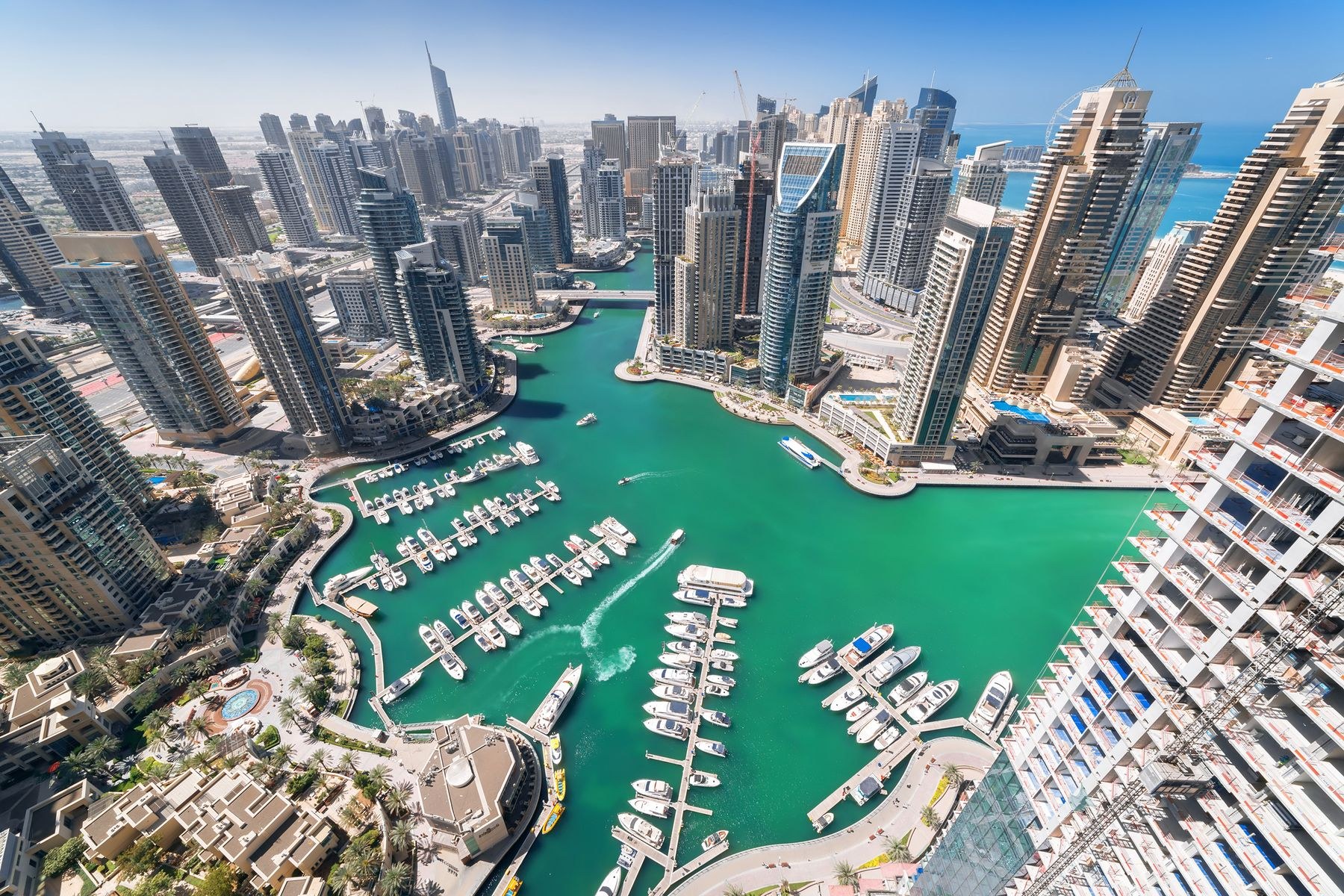
An Emaar high-rise community around a man-made marina, combining residential towers, a waterfront promenade, yacht berths, Dubai Marina Mall and the tram. Life faces the water, with JBR’s beaches adding a separate seaside setting nearby.
A community shaped by its marina
Dubai Marina developed around a man-made harbour connected to the sea. The water shapes the district: towers stand on both sides of the canal, with walking routes following the berths and passing beneath road bridges. Permanent homes, hotels, restaurants and tourist boat trips share the same setting. High-rise development creates a dense urban environment in which water remains the main open space. Different parts of the Marina have their own scale, from Emaar’s original tower neighbourhood to the northern group of skyscrapers and the residential developments closer to the mall. The community name connects several established residential settings.
Apartments and architectural landmarks
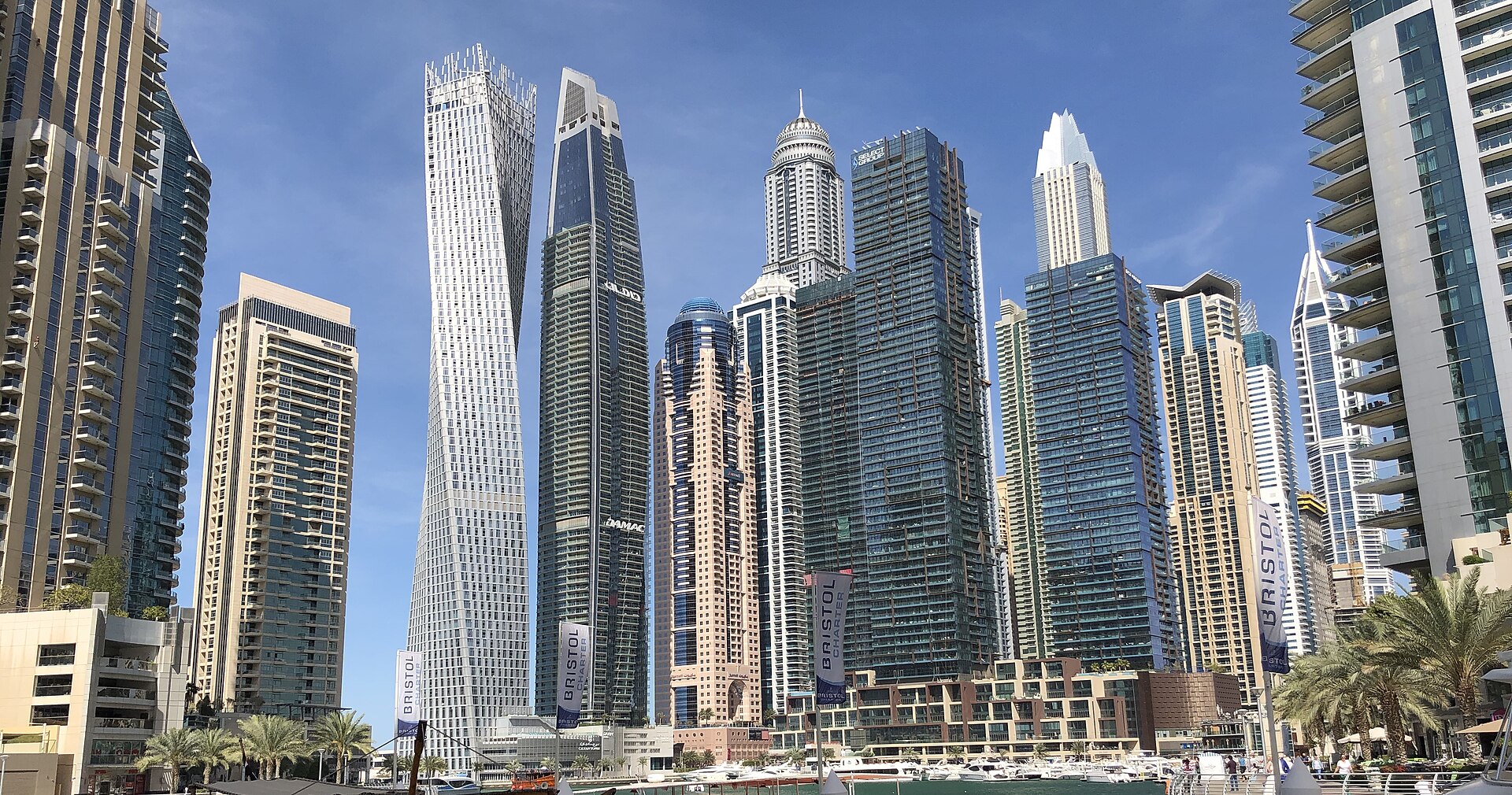
Apartments form the main housing stock in Dubai Marina, from studios to substantial penthouses. Cayan Tower is recognisable by its twisting silhouette, Princess Tower by its tall profile, and Marina Gate forms a separate group of residential towers beside the promenade. Serviced residences and some podium-level homes add other formats. Architecture, building age and internal layouts vary considerably because the Marina was developed through many individual projects. Apartments face the harbour, neighbouring towers, the city or the sea. Position along the canal and the surrounding building line shape each outlook, giving the waterfront address a wide range of views and residential settings.
Dubai Marina Towers and Marina Promenade
Dubai Marina Towers was the first completed residential development in the district. Its six towers are Murjan, Al Mass, Fairooz, Mesk, Al Yass and Anbar. Apartments sit alongside villas, with a retail promenade containing a supermarket, cafés and everyday services. Marina Promenade is a different six-tower development: Aurora, Shemara, Delphine, Beauport, Attessa and Paloma. It has its own shared pools, sports facilities and children’s spaces. These developments show how the high-rise district also contains residential groups with common grounds and amenities. A tower name and the name of its surrounding development describe different scales within the same address.
Marina Walk and life beside the water
Dubai Marina Walk connects residential buildings with cafés, restaurants and yacht berths. The promenade is used for walking and jogging, while sightseeing boats and cruise vessels travel on the water. During the day, residents’ errands overlap with visitor activity; in the evening, restaurant terraces and illuminated towers become more prominent. The Marina waterfront is a working leisure harbour with boat traffic, rather than a swimming beach. The sandy shoreline is on the JBR side. Together, these settings provide two distinct outdoor experiences: an urban promenade beside the berths and a separate journey to the sea through the beachfront neighbourhood.
Dubai Marina Mall and dining
Dubai Marina Mall combines shops, restaurants, a Waitrose supermarket and a cinema. Its harbour-side position connects shopping with the waterfront promenade. Nearby Pier 7 is a separate dining building and a landmark in this part of the Marina. Beyond the mall, cafés, grocery stores and practical services occupy lower tower levels and retail promenades. The dining scene ranges from everyday neighbourhood venues to hotel restaurants and evening destinations. Activity is therefore distributed across the district rather than concentrated in a single shopping centre. Individual tower groups have local services of their own, while the mall and Pier 7 create a larger waterfront destination.
Metro, tram and road connections
The Red Line Metro runs along Sheikh Zayed Road, with Sobha Realty and DMCC stations serving the area. The tram passes through Dubai Marina and JBR, with stops including Dubai Marina Mall, Dubai Marina and Marina Towers, before continuing towards Media City, Palm Jumeirah and Al Sufouh. The modes complement each other: the Metro supports longer city journeys, while the tram provides local connections along the coastal districts. Road journeys use internal streets and bridges across the harbour, with access towards Sheikh Zayed Road. Within the dense development, the position of a home relative to the canal crossings and rail stations shapes everyday routes.
Early years and healthcare
Dubai Marina has nurseries including Raffles and Willow, while schooling for older children forms part of the wider geography of neighbouring districts. Residential developments add family facilities through playgrounds and swimming pools; Dubai Marina Towers also has children’s spaces and everyday services within the development. Emirates Hospitals Clinic Dubai Marina is in Al Habtoor Business Tower, with family medicine, paediatrics, dentistry and other outpatient specialties. The district therefore combines apartments and hospitality with ordinary urban services. Hospital care and school journeys may extend beyond the Marina itself, while some routine needs can be met within the neighbourhood.
Marina, JBR and JLT: neighbouring but distinct
Dubai Marina and JBR are closely connected but describe different settings. The Marina faces the harbour and yacht berths; JBR faces the beach, The Walk and the sea. Across Sheikh Zayed Road, JLT combines artificial lakes with offices, residential towers and a park. Bluewaters is a separate island district off the JBR coast. Dubai Marina occupies its own position among these neighbours: dense high-rise housing with a public waterfront, shopping and transport. It has an urban rhythm in which restaurants, hotels and visitors remain part of the surroundings. Large private gardens and low-rise residential streets belong to a different type of community.