
Mark both doors, not just two districts
Start with the entrance to the actual residential building and the entrance to the destination. A neighbourhood or mall name is too broad for this comparison. A building exit may lead into a courtyard while the useful street lies on the other side. An office can also have several entrances, security checks and an internal walk. Record both addresses and the required arrival time. A claim of being near the metro then becomes a testable question: which route would you actually use in the morning and evening?
Find the station entrance you need
A station marker identifies a transport facility, not necessarily its nearest usable door. Check the road side, crossing and approach to the entrance you can use. Do not draw a route through a closed plot, construction area or private car park simply because the line looks short on a map. RTA's official network map helps identify the station and line; the remaining walk needs a separate inspection. Photograph landmarks and keep a clear sequence of turns if the housing decision depends on that route.
Build the trip in an official planner
For a Dubai journey, start with RTA's Journey Planner or S'hail app. RTA describes S'hail as an integrated tool for planning metro, tram, bus and other modes. Enter the actual start and destination and check the time used for the calculation. The first result is not an unchanging timetable for every day. Save the check date and the option considered, particularly when a transfer or bus leg is involved. A convenient weekend route may not match the schedule of a normal working day.
Break the time into useful parts
Record leaving the apartment, the lift and lobby, the walk to the station, access to the platform, waiting, travel, transfers and the final approach to the destination separately. Do not confuse time on the train with the complete door-to-door journey. Leave an unknown leg as a question rather than zero minutes. Then test the full route and compare it with the estimate. If an option needs two transfers, assess the number of steps and waits to repeat every day as well as the average total.
Inspect the walk at your own pace
Walk in ordinary footwear and with what you regularly carry: a work bag, groceries or a stroller. Look at surfaces, kerbs, crossings, shade and waiting areas. A pavement on one segment does not establish a continuous practical route to the entrance. For particular accessibility needs, confirm the required crossing and station arrangements with the responsible organisation. This exercise tests your routine rather than regulatory compliance. A marketing photograph of people walking is not evidence that a particular route is accessible or suitable for your circumstances.
Check evenings, weekends and the last train
RTA's timetable page distinguishes station opening hours and directs passengers to special schedules for holidays and events. An open station does not mean the last train in the required direction will arrive at any moment before closing. Check the actual journey time and direction, including transfers and the walk after leaving the system. A late finish at work needs a fallback for a missed connection. Do not carry an ordinary schedule into a holiday or make a necessary journey depend on an old network screenshot.
Compare costs and a fallback route
Compare the whole recurring pattern rather than only a ticket: getting to the station, parking where needed and the journey home if the normal route is unavailable. Check fares and terms in current RTA services, not by counting stops on a photograph. An alternative might involve a bus, taxi or different departure time, but its cost and usefulness need separate checking. A home's convenience changes if an advertised walk repeatedly becomes an additional car journey. Record that trade-off rather than hiding it inside a broad near-metro label.
Keep the result before choosing the apartment
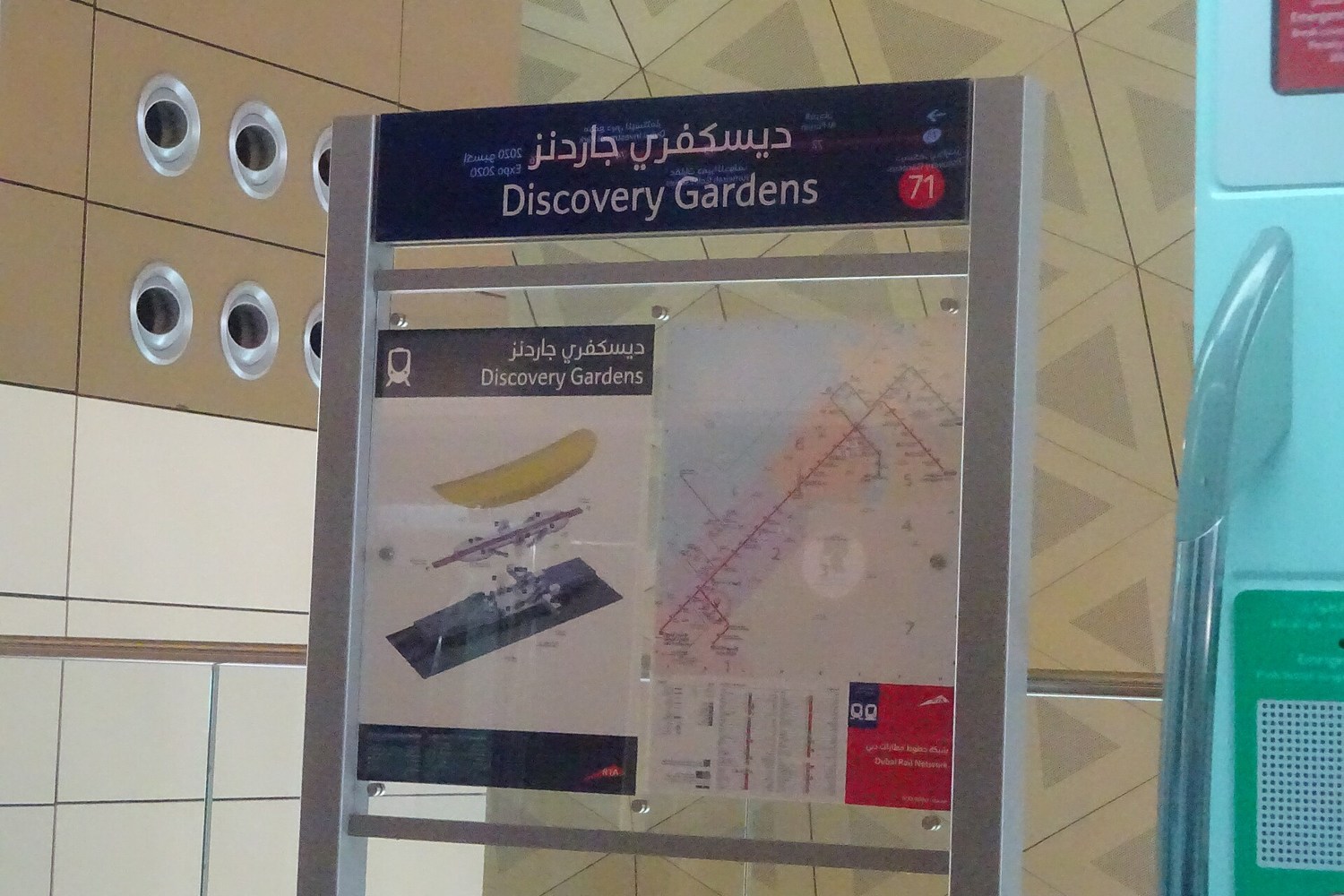
For each option, save the route, date, time of the check, actual overall duration and awkward sections. Separate what you walked yourself from the app estimate and the listing promise. Compare homes against the same working routine, rather than different ideal conditions. The Discovery Gardens sign photograph in this article was taken on 1 March 2022. It illustrates station wayfinding, not the current network. The useful result is a clear personal journey, not a universal promise that every home beside a metro station works equally well for everyone.